
Getting Your Bike Through the Wet Season
Three months of humidity does more damage to a motorcycle than a year of riding does. The bikes that come out of a Kimberley wet in the worst condition are almost always the ones that were not ridden at all.
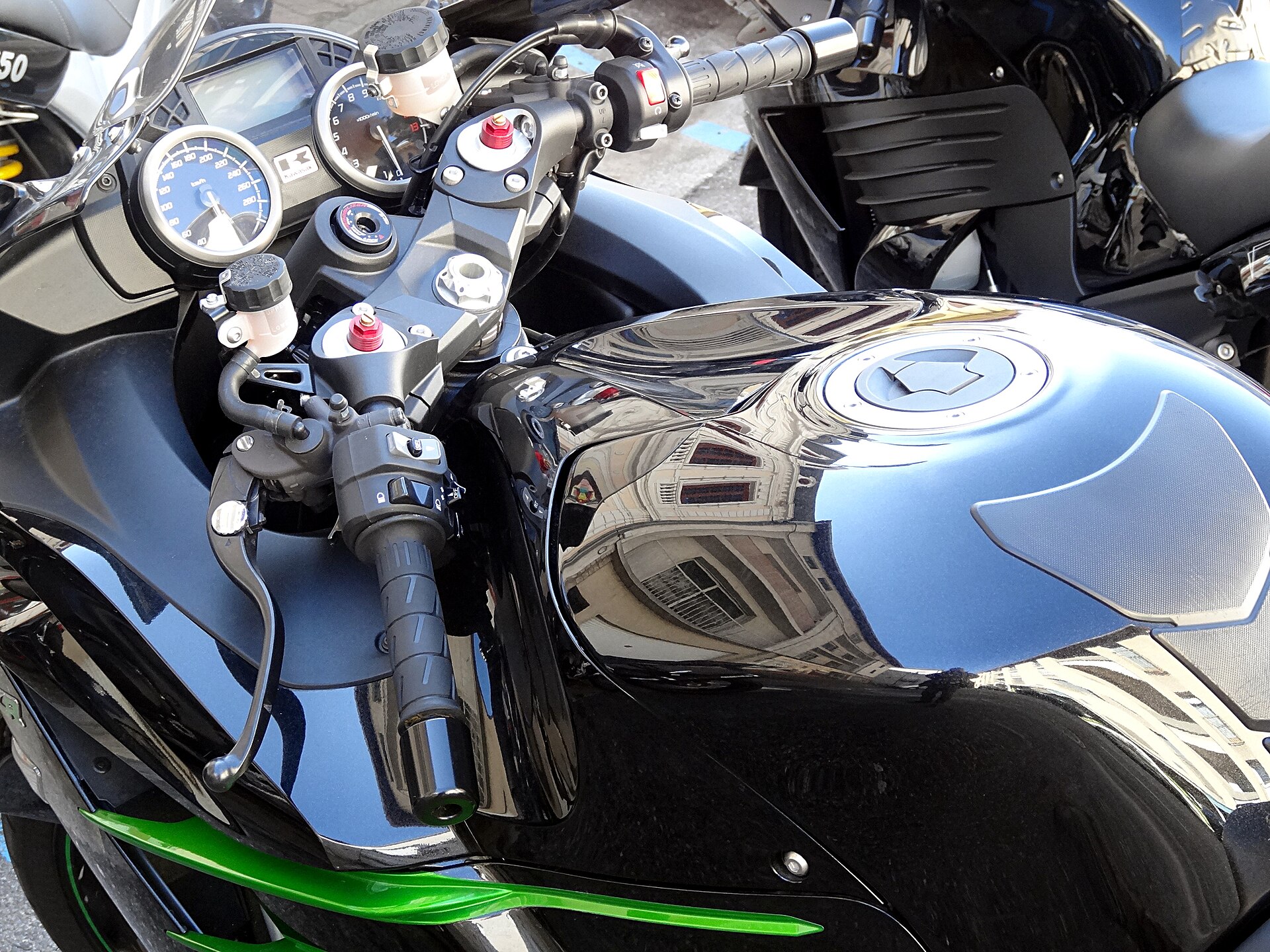
Riders who move up here from the south tend to think of the wet as a riding problem — roads closed, visibility poor, the odd creek crossing. It is those things. But the damage we see in the workshop in April and May is almost never crash damage or water ingress from riding. It is corrosion, seized cables, mouldy seats, dead batteries and rotten fuel, on machines that spent December to March under a carport doing nothing.
Humidity is relentless in a way that rain is not. Rain is an event you can dry off from. Three months of air sitting near saturation point works its way into every connector, bearing and cavity on the bike, and it does not stop at night.
Before the first storms
The useful work happens in October and November, not in January when it is already too late. Roughly a month before the build-up turns into actual rain, do the following.
- Change the oil, even if it is not due. Used oil contains combustion acids and moisture. Leaving that sitting in an engine for three months is worse than the cost of an oil change. Fresh oil, fresh filter, and run the engine to circulate it.
- Clean and lubricate the chain properly. Not a squirt of lube over dirty links. Clean it, dry it, then lubricate. A dirty chain left to sit in humidity develops surface rust between the plates that no amount of later lubrication reverses.
- Wash the bike and dry it completely. Salt from coastal air and mud from the last dry season rides both hold moisture against metal. Get underneath it. A leaf blower is more useful here than a chamois.
- Treat exposed metal. A light corrosion inhibitor on fasteners, brackets, exposed welds and inside the fairing where you cannot see. Avoid brake components and tyres.
- Check the brake fluid. Brake fluid absorbs water out of the air. If it is more than a year old, replace it before the wet rather than after.
- Deal with the fuel. Either fill the tank to the top — less air space means less condensation — or drain it. A half full tank for three months is the worst option available.
If the bike will sit
A bike that is not going to be ridden for three months needs different treatment to one in weekly use.
- Battery. Take it off the bike or put it on a maintenance charger. A battery left connected and flat for three months in this heat is frequently not recoverable, and heat kills batteries faster here than cold does down south.
- Tyres. Inflate to the upper end of the recommended range and, if you can, get the weight off them. Flat spots from three months on soft tyres are real.
- Cover, but breathe. A waterproof cover with no ventilation traps humidity against the bike and is worse than no cover at all. If you use one, lift it periodically. A carport with airflow beats a sealed cover every time.
- Off the ground. Concrete wicks moisture. A sheet of plywood or a couple of pavers under the tyres makes a measurable difference over a season.
- Start it, or do not. If you can ride it properly for twenty minutes once a fortnight, do. A brief start in the driveway is worse than nothing — it produces condensation in the exhaust and crankcase without ever getting hot enough to drive it off.
Riding through it
Plenty of people do ride through the wet, and a bike in regular use generally fares better than one parked. The maintenance interval shortens considerably though.
| Item | Dry season | Wet season |
|---|---|---|
| Chain clean and lube | Every 300–500 km | After every wet ride, without exception |
| Wash and dry | As needed | Weekly, including underneath |
| Brake inspection | Each service | Monthly — wet grit destroys pads quickly |
| Air filter | Inspect each service | Inspect monthly for damp and mould |
| Electrical connectors | Each service | Treat before the wet, inspect if any fault appears |
Floodwater
This is the part where we stop giving maintenance advice and give safety advice instead. Do not ride into floodwater. Not across a flooded causeway, not through a section of road with water over it, not because a car went through first.
The reasons are ordinary and well known: you cannot see the road surface, the depth is not what it looks like, the current is stronger than it appears, and an engine that ingests water is generally a rebuild rather than a repair. In this region there is also the entirely reasonable possibility of crocodiles in water that was dry land a week earlier.
Beyond that, water damage is excluded from most insurance policies. A submerged bike is frequently a total loss that you have paid for yourself. There is more on that on our insurance page.
Coming out the other side
When the roads open up again, book a proper inspection before the first long ride. What we look at:
- Brake function and pad condition, front and rear
- Chain and sprocket wear, and whether surface rust has pitted the rollers
- Tyre pressure, condition and any perished rubber
- Battery condition under load, not just resting voltage
- Fuel condition and whether the system needs draining
- Cable operation — clutch and throttle both seize quietly over a wet
- Wheel and steering head bearings for water ingress
- Corrosion at electrical connectors and earth points
Book it early. Everybody in Broome has the same idea in the same fortnight when the roads reopen. The workshop fills up fast in April, and a bike that has sat for three months genuinely does need looking at before you take it four hundred kilometres up the road.
Ring the workshop on (08) 9192 4471 to book a pre-wet or post-wet inspection, or read about what a log book service covers.