
Riding Gear for the Tropics
There is no point recommending gear that nobody will put on. At thirty-eight degrees with ninety percent humidity, the best jacket in the shop is the one still hanging in your garage.
Riders in cooler places debate leather against textile. Up here the real debate is between wearing something and wearing nothing, and heat is the reason people end up on the wrong side of it.
We are not going to lecture anybody. What we will say is that the gravel and bitumen in this region are exactly as unforgiving as they are anywhere else, and that the hospital is a long way from most of where you will be riding. So the practical question is not "what is the most protective gear available" but "what is the most protective gear you will still be wearing in October".
Start with the helmet
It is the one item where there is no sensible compromise, and it is also the item most often bought badly.
- Fit beats brand, every time. A helmet should be firm enough that the skin on your forehead moves when you move the helmet, without pressure points. Loose is not protective.
- Try it on. Head shapes vary and sizing is not consistent between makers. This is the single strongest argument for buying gear in a shop rather than online, and it is why we carry a full size range.
- Ventilation is a real specification. Front and top vents with actual exhaust ports at the rear make a genuine difference at low speed in traffic.
- Light colours are cooler. Not marginally. A black helmet in direct Kimberley sun is unpleasant enough to shorten rides.
- Replace after any impact, even if it looks fine. The energy management is single use.
- Replace on age. Manufacturers generally advise around five years from first use. In this climate, UV and humidity are not kind to the liner or the shell.
What works in the heat
| Item | What works here | What does not |
|---|---|---|
| Jacket | Mesh or heavily perforated textile with removable armour at shoulders, elbows and back | Leather, or anything with a fixed waterproof membrane |
| Pants | Ventilated riding pants, or riding jeans with knee armour | Ordinary jeans, which abrade through almost immediately |
| Gloves | Short vented gloves with palm sliders and knuckle protection | Gauntlet winter gloves, or no gloves at all |
| Boots | Vented riding boots with ankle protection above the malleolus | Work boots, joggers, and obviously thongs |
| Base layer | A thin wicking layer — genuinely cooler than bare skin under mesh | Cotton, which stays wet and stops evaporating |
| Wet season | A separate packable rain shell over the mesh gear | A single jacket trying to be both |
Airflow only works while moving
Mesh gear is excellent at sixty kilometres an hour and does nothing at all at a set of lights. That is worth planning around in a town where the build-up regularly puts the apparent temperature above forty.
- Ride early or late where you can
- Carry water, and drink it before you feel thirsty
- Stop in shade rather than pushing through
- Wet your base layer before setting off on a long ride — the evaporative effect lasts a surprisingly long time
- Watch for the early signs of heat stress: irritability, poor decisions, and a sudden lack of sweat
Off road and junior gear
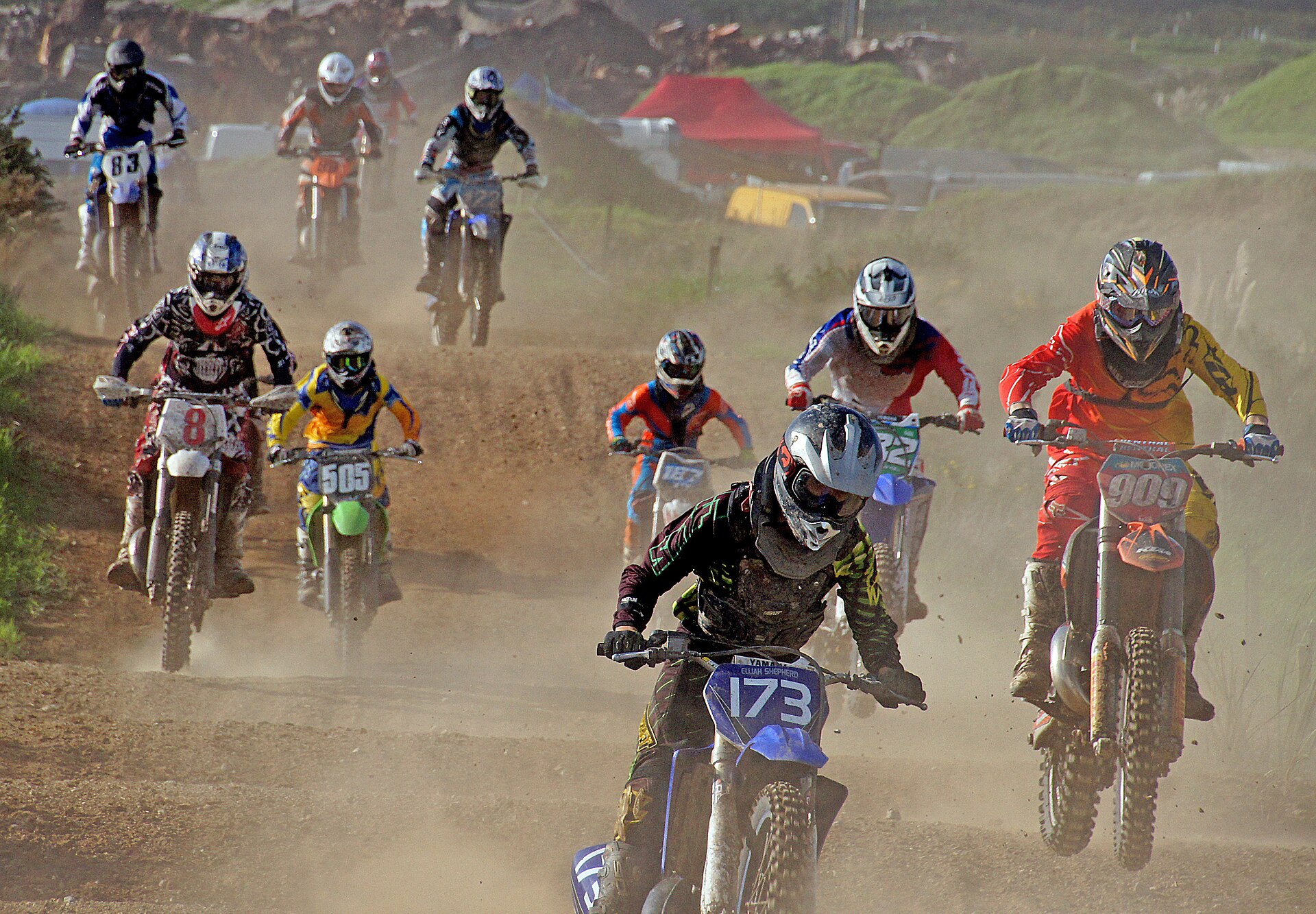
For dirt riding, the standard set is helmet, goggles, boots, gloves, and a chest protector or roost deflector. Off road boots in particular do a job that road boots do not, because the injuries are different — twisting and crushing rather than sliding.
For children, buy the gear at the same time as the bike and fit it properly. A helmet bought "to grow into" is not protective now, which is when it is needed. Uncomfortable gear will be argued about before every ride until it stops being worn at all.
Look after it
- Wash gear regularly. Salt from sweat degrades textiles and stitching over time, and it will smell.
- Dry it properly. Gear left damp through a Kimberley wet grows mould inside the armour pockets.
- Keep it out of direct sun. UV is what kills textiles here, not abrasion.
- Check the armour. Removable inserts migrate out of position over time. They only work where they belong.
- Check insurance. Riding gear is frequently excluded or capped low on a motorcycle policy. A full set is worth more than most people assume — see our insurance page.
We carry helmets, boots, gloves, jackets and armour in a full size range so you can try before you buy. Parts and gear counter (08) 9192 4470.